Water Heater Repair in New Dorp, Staten Island
Waking up to cold water in the shower or finding pooling water near your basement utility room requires swift, knowledgeable troubleshooting. We service standalone atmospheric gas water heaters, electric units, and indirect storage tanks linked to primary heating boilers across New Dorp and Midland Beach.
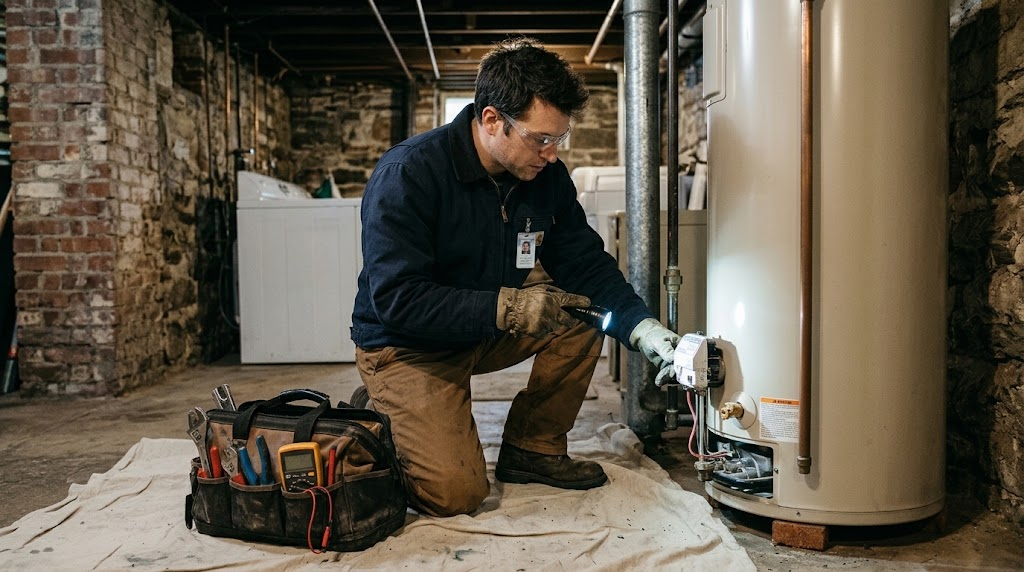
Common Water Heater Failures in Staten Island Residences
Hot water is essential for daily health, cooking, and sanitary comfort. Because New Dorp basements frequently house combined heating and domestic water equipment, understanding how these systems operate ensures fast, accurate service.
1. Pilot Light Outages & Thermocouple Failures
If your natural gas water heater will not ignite, the standing pilot has likely extinguished. Common triggers include drafts from basement windows, lint clogging the flame arrestor screen at the bottom of the combustion chamber, or a deteriorated thermocouple or thermopile.
The thermocouple is a crucial safety sensor that generates millivoltage from the heat of the pilot flame to keep the internal gas safety valve open. When it weakens from oxidation, it cuts gas flow to prevent unburned fuel leakage. We test sensor millivolts, clear air intake screens, and replace defective gas control valves.
2. Rapid Temperature Depletion & Broken Dip Tubes
Does your shower turn cold after only three to five minutes? When a tank holds 40 or 50 gallons of water but exhausts its heat rapidly, the internal polypropylene dip tube has likely fractured.
Under normal operation, the dip tube directs incoming cold city water straight to the base of the tank near the burner. When the tube disintegrates, cold water enters at the top of the vessel, immediately cooling the water heading into your hot faucets. Replacing this internal tube restores your water heater's full capacity.
3. Rumbling, Popping, and Sediment Accumulation
Over years of heating domestic water, calcium carbonate and dissolved minerals precipitate out of solution and settle at the bottom of the water heater tank.
As the burner fires through the steel bottom head, water trapped under this hardened mineral crust reaches boiling temperatures, creating violent steam pockets that pop and thump like boiling popcorn. This sediment layer causes metal fatigue, increases fuel usage, and ultimately leads to bottom tank rupture if not flushed periodically.
4. Indirect Water Heaters Connected to Heating Boilers
Many New Dorp residences with hydronic or steam boilers do not possess a standalone gas water heater with a chimney vent. Instead, they utilize an indirect water heater—a well-insulated storage tank that receives hot water from the home's heating boiler through a dedicated zone circulator pump.
When an indirect system loses hot water, the fault often lies within the boiler controls: a stuck zone valve actuator, a failed circulator relay, or a defective aquastat switch rather than the tank itself. Our technicians possess specialized heating expertise to diagnose both the boiler side and the plumbing side of indirect hot water equipment.
Repair vs. Replacement Considerations
When to Repair: External leaks from the temperature-and-pressure (T&P) safety valve, loose brass pipe unions, corroded drain valves, thermocouple failures, or electric heating element burnouts can all be resolved affordably with replacement parts.
When Replacement is Required: If water is seeping from the jacket seams or weeping out from the bottom baseplate, the internal steel vessel has corroded through. Storage tanks operate under 50–70 PSI of municipal water pressure; a ruptured tank cannot be patched and requires immediate replacement to avoid basement flooding.
To protect your basement against water tank leaks or seasonal flooding, explore our Sump Pump & Flood Protection services, or schedule a routine inspection via Boiler Maintenance.
Frequently Asked Questions About Water Heater Repair
Restore Reliable Hot Water in New Dorp Today
Call NY Plumbing for fast troubleshooting of water heater pilot outages, leaks, and indirect tank failures.
Call (315) 202-8009